

Fjord + Accenture
Signet Playbook
From 97 epics to a team that knows what "done" means
Guiding strategy into repeatable product-team behavior: vision workshops, prioritization, roles, sprint rituals and clear definitions of done.
TL;DR
- I co-facilitated and led a table in the Product Vision and Product Playbook workshops (February 2020, Accenture | Fjord).
- I designed the workshop handouts and the eight role monsters.
- I wrote the revised Product Team Playbook, a 66-page working draft.
- The workshops turned discovery (30 stakeholder interviews, 97 epics) into a shared vision and a ranked top ten.
Also called Signet Product Playbook.
The gist
The premise: Set the vision and operating model for Signet's new product teams.
The reality: The risk wasn't talent or effort. It was decision noise, and it started with vocabulary.
In February 2020, I helped facilitate Fjord/Accenture’s workshop program for Signet, connecting product vision with practical delivery. We focused on checkout, payment and jewelry configurators, helping teams prioritize customer value and practice clear product roles, two-week sprints, testing and continuous improvement.
The fine print
- Client: Signet Jewelers
- Delivered through: Fjord and Accenture (co-branded engagement)
- Engagement: Consultant
- Scope: Two product teams: Checkout/Payment and Jewelry Configurators
- Tags: Product strategy · Workshop facilitation · Agile operating model
The workshops
- Product Vision WorkshopThe brief focused on checkout and payment experiences and jewelry configurators, with planned product visions, backlogs, team structures and an agile cadence.
- Product Playbook WorkshopA shared playbook for distributed teams covered backlog refinement, planning, demos and retrospectives in two-week sprints.
Where I sat
Signet's ask: run a planning phase that sets the vision and the operating approach for its new product teams. My part was in the room: I was a co-facilitator and a table lead in the cross-functional workshops where that direction got decided. I designed the eight role monsters and the ceremonies handouts. The research, the epics and the first playbook were a Fjord and Accenture team effort with our Signet counterparts; the later revision was mine.
The frame
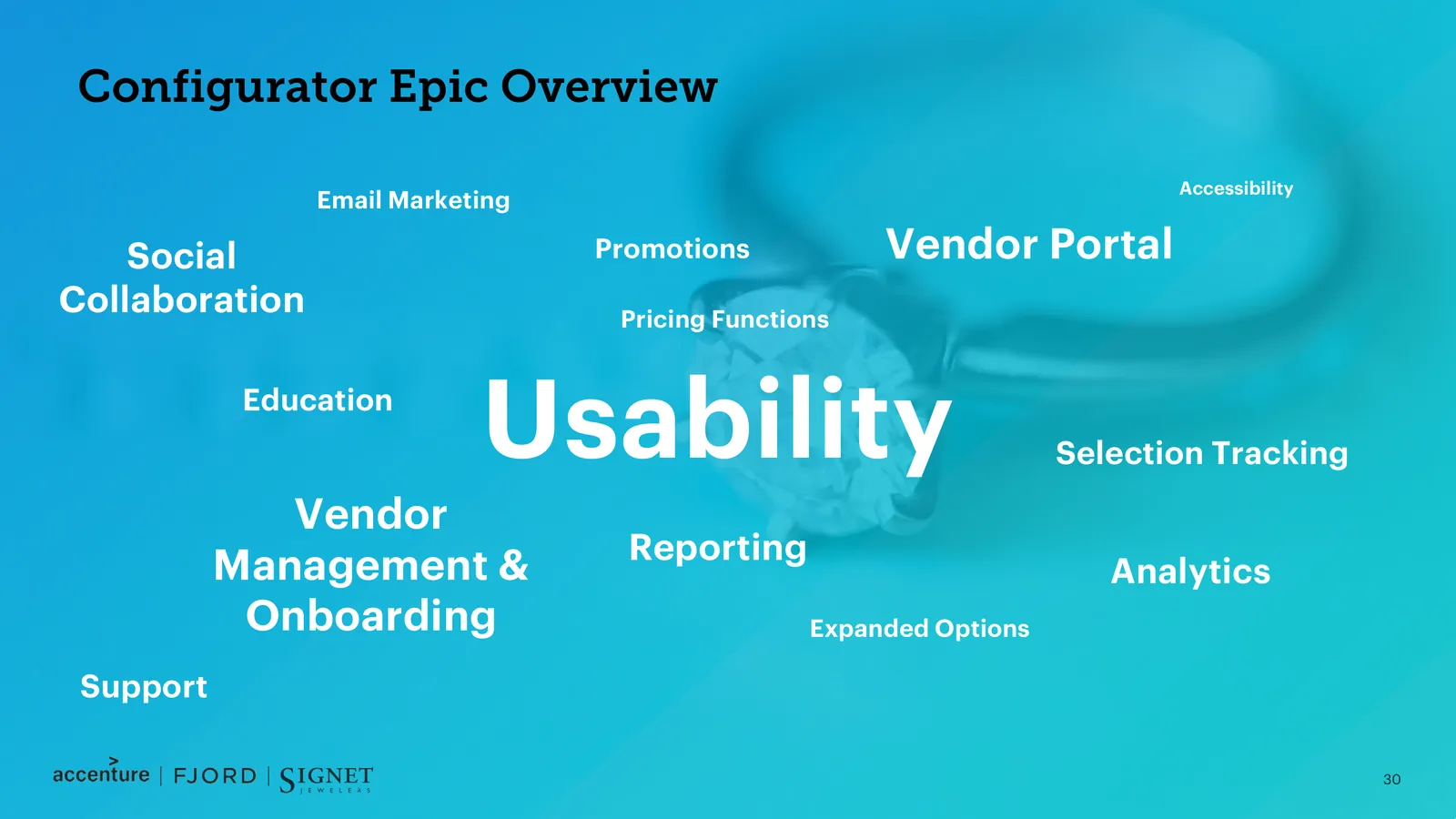
The goal was to move Signet from projects to products. A project has a budget and an end date; a product, as we put it on a slide, "has no end date." Discovery had already produced 27 themes and 97 epics. Three tensions showed up:
- Too many plausible directions. The configurator scope alone ran from usability and education to a vendor portal, social collaboration and analytics.
- Project habits in a product org. A project team ramps down at the close, but a product never closes.
- Nobody delivers alone. We mapped more than a dozen adjacent teams a product depends on.
There was a quieter fourth tension: words. "Vision", "epic" and "done" meant slightly different things, so both workshops opened by defining terms before anyone debated a roadmap.
"Speed doesn't break companies. Unclear priorities do."
What I made
The defining move: make the operating model something people practice, not a deck they read. Two workshops, six days apart, did the work.
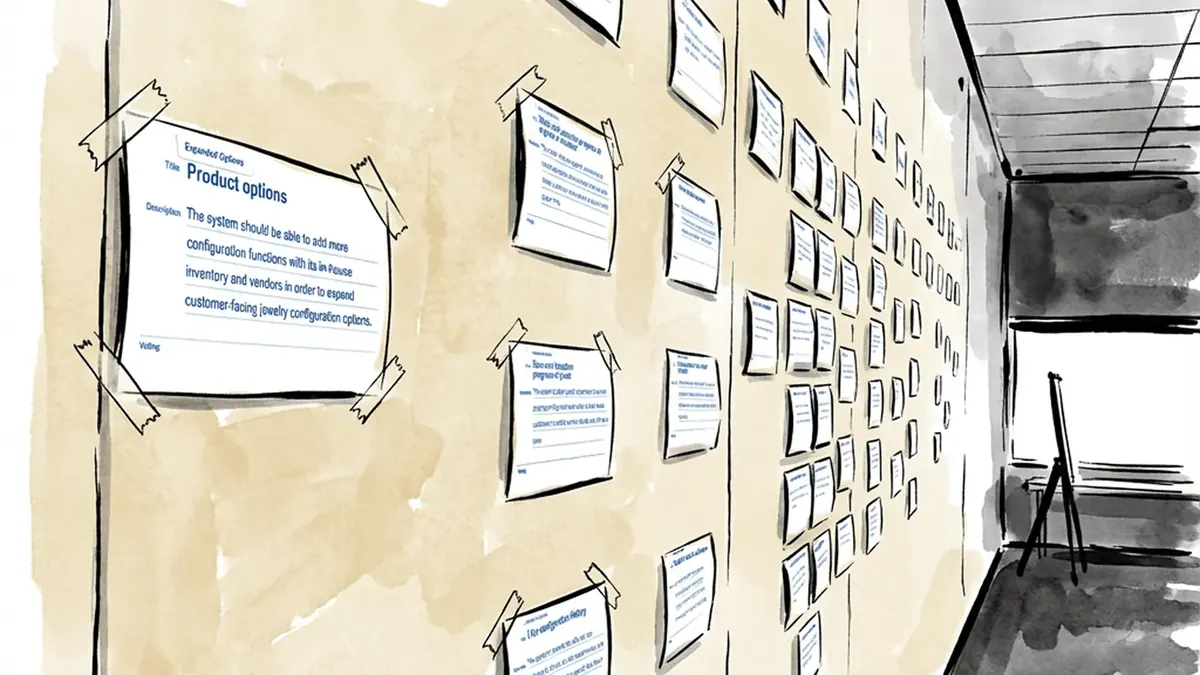
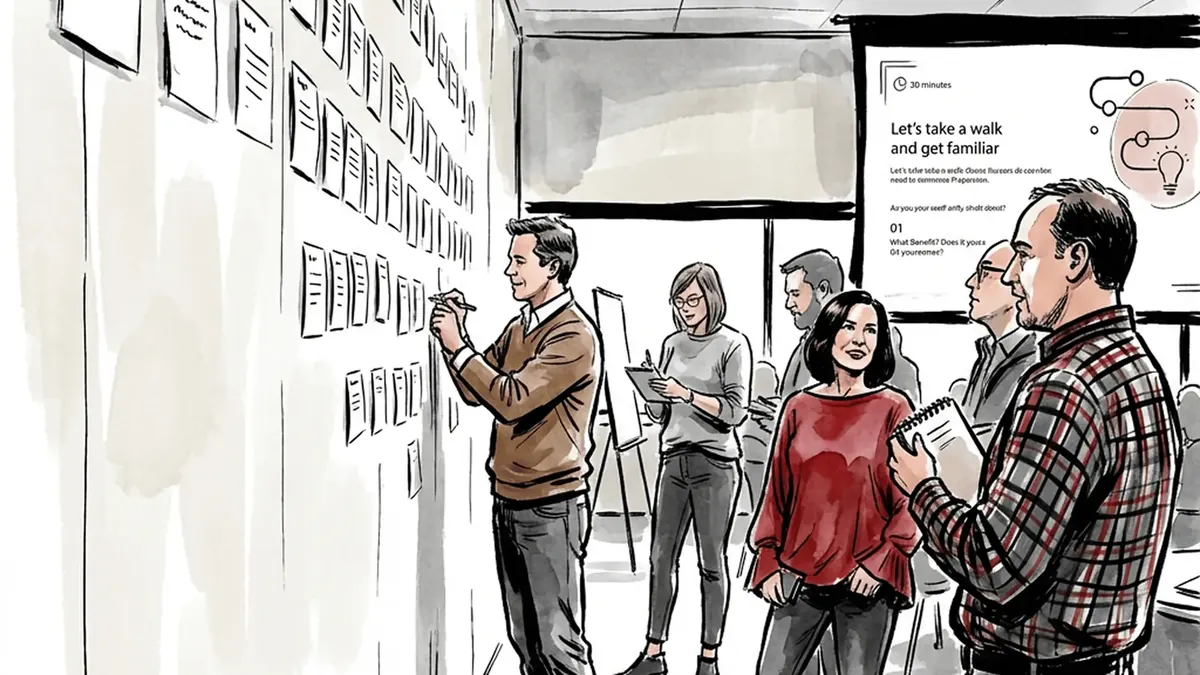
- Product Vision Workshop: from 97 epics to a top ten. A gallery walk of the epic wall, three "voting jewels" per person for their "can't live without it" epics, a group ranking of the top ten, then success measures and vision statements drafted from a prompt instead of a blank page.
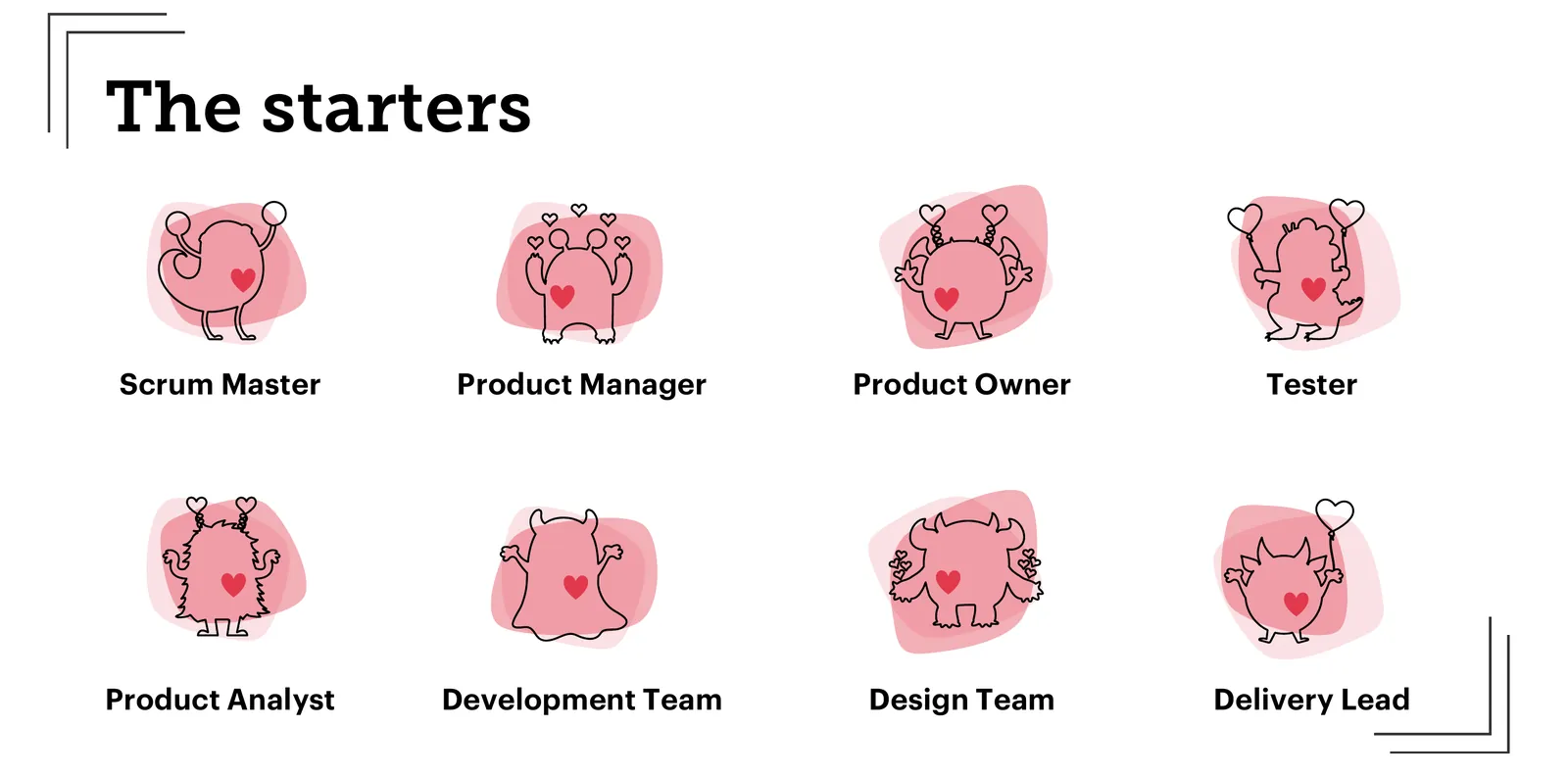
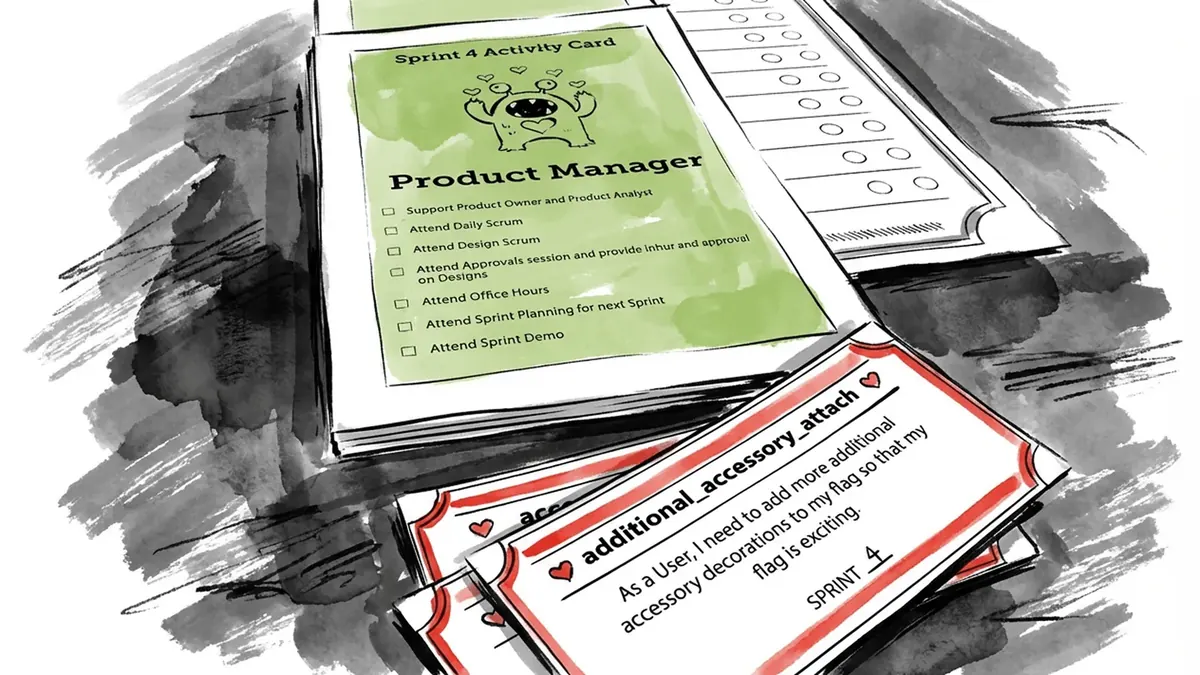
- Product Playbook Workshop: from vocabulary to a sprint the room actually ran. The morning defined eight starter roles, the user story path to done and a two-week cadence. The afternoon was a 45-minute simulation: three sprints to ship a paper Valentine's Day flag, ending at a Go/No-go.
What I cut
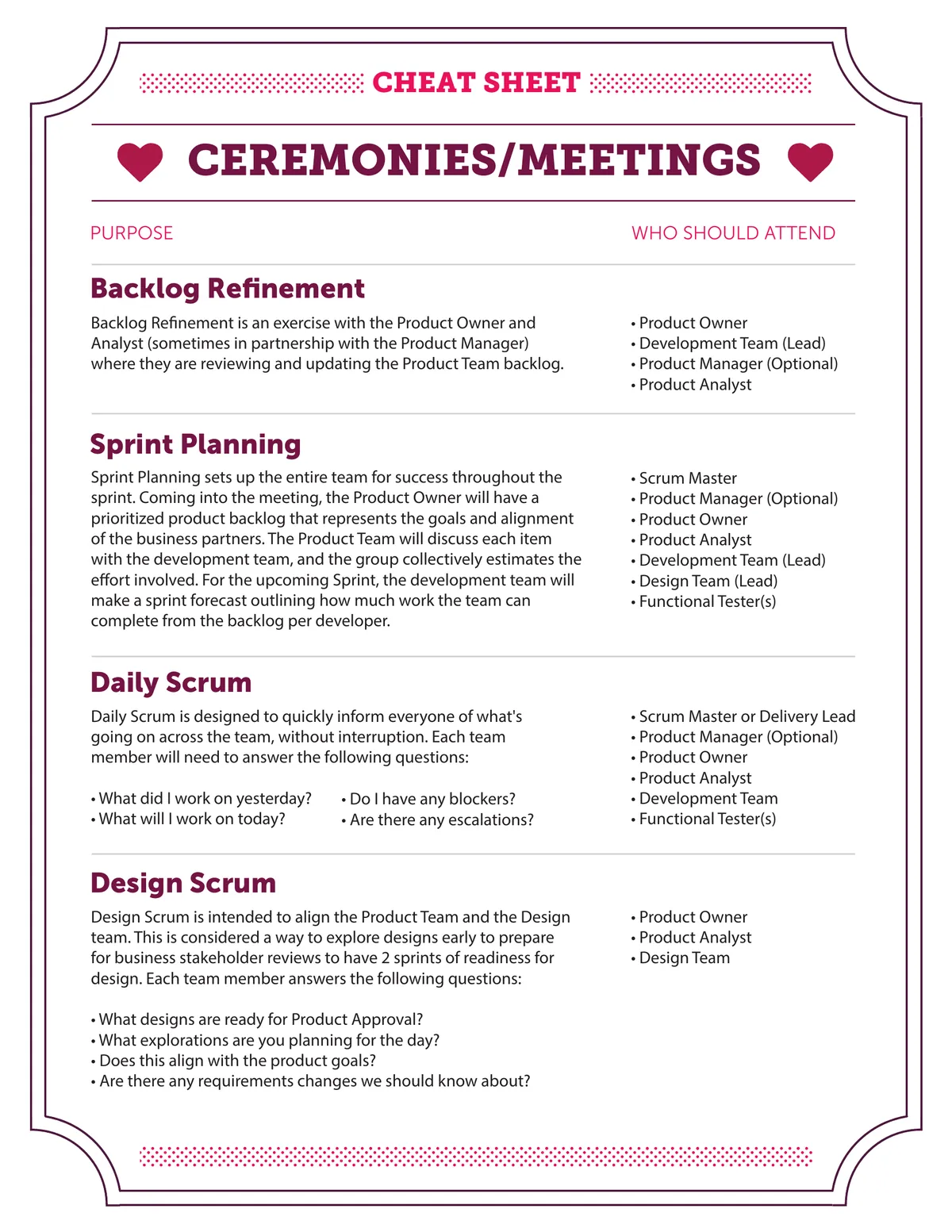
The room got the starters, not the org chart: eight core roles, eight core ceremonies and one two-page cheat sheet I designed to fit on a table. The vision work ran the same way: a prompt to react to, top three picks instead of debating all 97 epics, and a top ten instead of a full roadmap.
The friction
Everyone can agree with an operating model in a meeting. Definitions on slides don't change how next Tuesday goes, which is why half of the second workshop was a game. And the honest caveat: a playbook is a set of recommendations, not adoption. The playbook itself says there is "not a one size fits all model." The real test happens in the teams, after the facilitator leaves.
What shipped
The engagement delivered a Product Vision (vision statements and prioritized backlog epics) and a Product Playbook (delivery best practices, team structure, the core product team and an agile delivery cadence). Later, I revised the playbook into a 66-page working draft.
Practices put to work
When the pandemic disrupted store-based retail weeks later, those ways of working became especially relevant. Signet later described empowered agile teams delivering customer improvements through two-week development cycles—the same cadence and principles covered in our workshop program.[1]
My contribution was helping teams build the shared direction and delivery practices that supported Signet’s wider transformation.
Company-wide results
Signet’s broader transformation · FY2022
- Total annual sales
- $7.83B
- Total sales year over year
- +49.7%
- E-commerce sales year over year
- +27.6%
Year ended January 29, 2022. Total sales were also 27.5% above pre-pandemic FY2020.[2]
These results reflect Signet’s company-wide performance across its broader transformation program. Accenture describes the overall partnership as contributing to strong growth.[3]
What I'd carry forward
Vision only matters if it changes decisions. People learn an operating model by running it, even if all they're building is a paper flag. Great products don't scale by adding clarity later. They scale by designing clarity first.
The full story
Inside the vision workshop
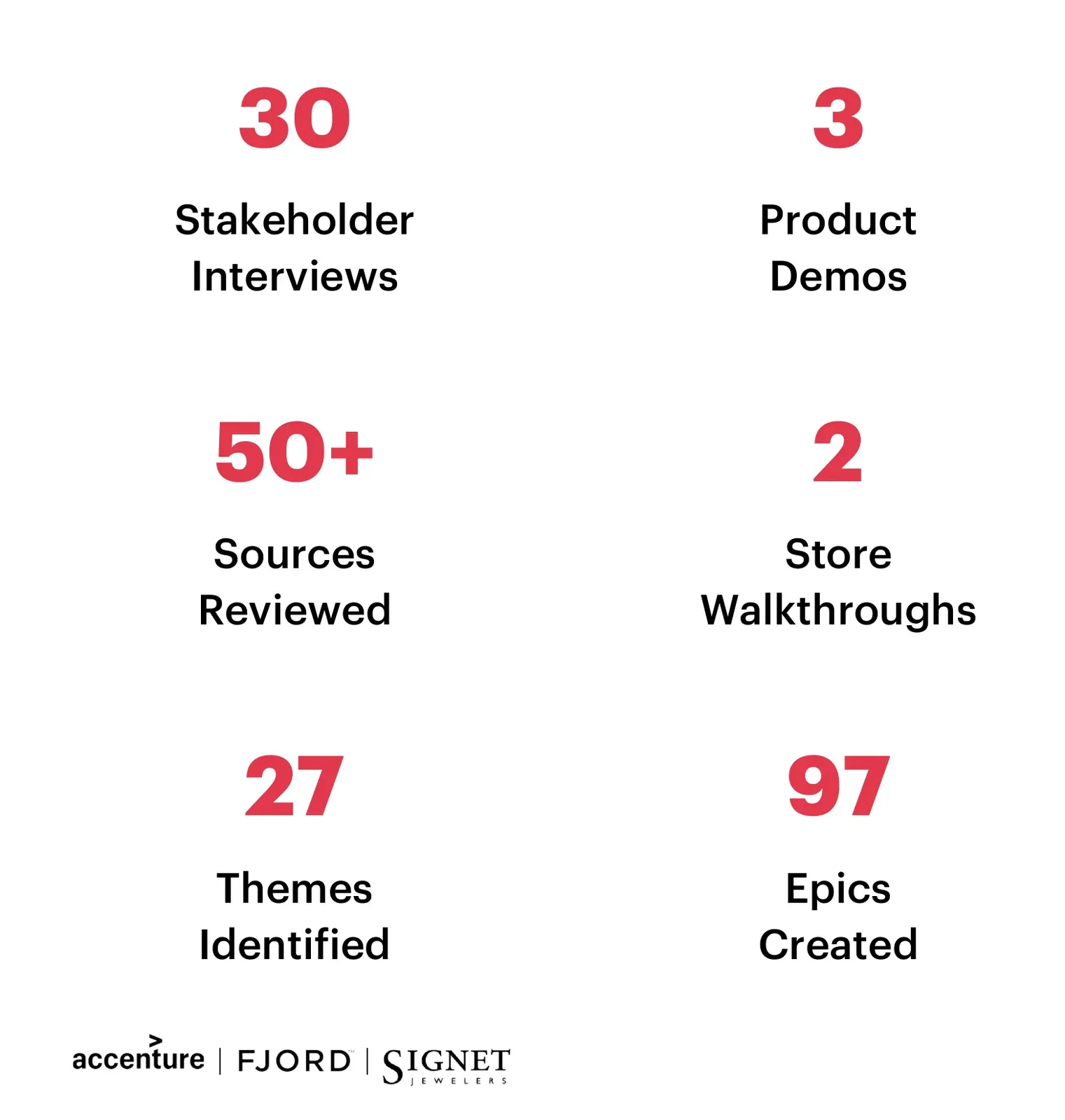
Discovery had done the listening: 30 stakeholder interviews, 50+ sources reviewed, three product demos and two store walkthroughs. That added up to 27 themes and 97 epics.
Tables warmed up with product-thinking exercises: "How might we…" statements for the configurator, then brand associations, where they compared three outside brands to Signet. Next came a gallery walk of the epic wall, asking two questions of each epic: what does it do for the customer, and how much does it matter in the first iteration? People added what was missing. Then everyone voted with three "voting jewels" on their "can't live without it" epics, and the votes set up a group ranking of the top ten. We closed by picking the top success measures and drafting vision statements from a prompt instead of a blank page.
Inside the playbook workshop
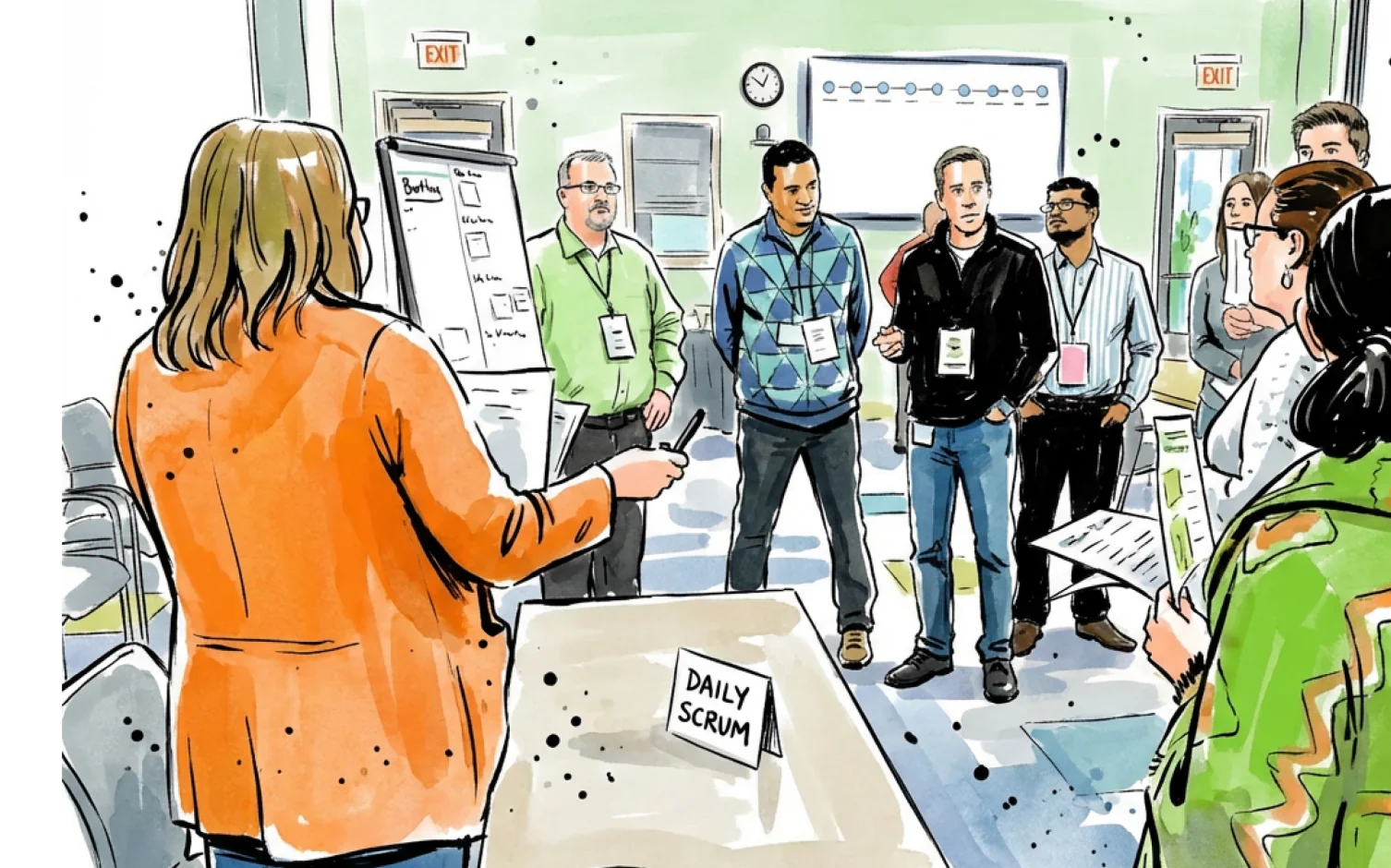
Same group, back for round two. The opening slide said it plainly: "Product is the sum of many parts." The morning defined eight starter roles, each one a heart-bellied little monster I designed, with a one-word personality ("Task oriented", "Strategy focused", "Communicative"). It also covered the user story path to done and a two-week cadence that starts on a Wednesday, with a Design Scrum keeping design two sprints ahead of development. The afternoon was a 45-minute simulation. Everyone got a role card and a brief: stakeholders have approved a design for a Valentine's Day flag, due February 14 for a launch celebration. We had three sprints and a velocity of 13 points to get it done, and the Accenture team played outside vendors around the room. The teams ran daily scrums, design scrums, approvals, planning, demos and retros, ending at a Go/No-go.
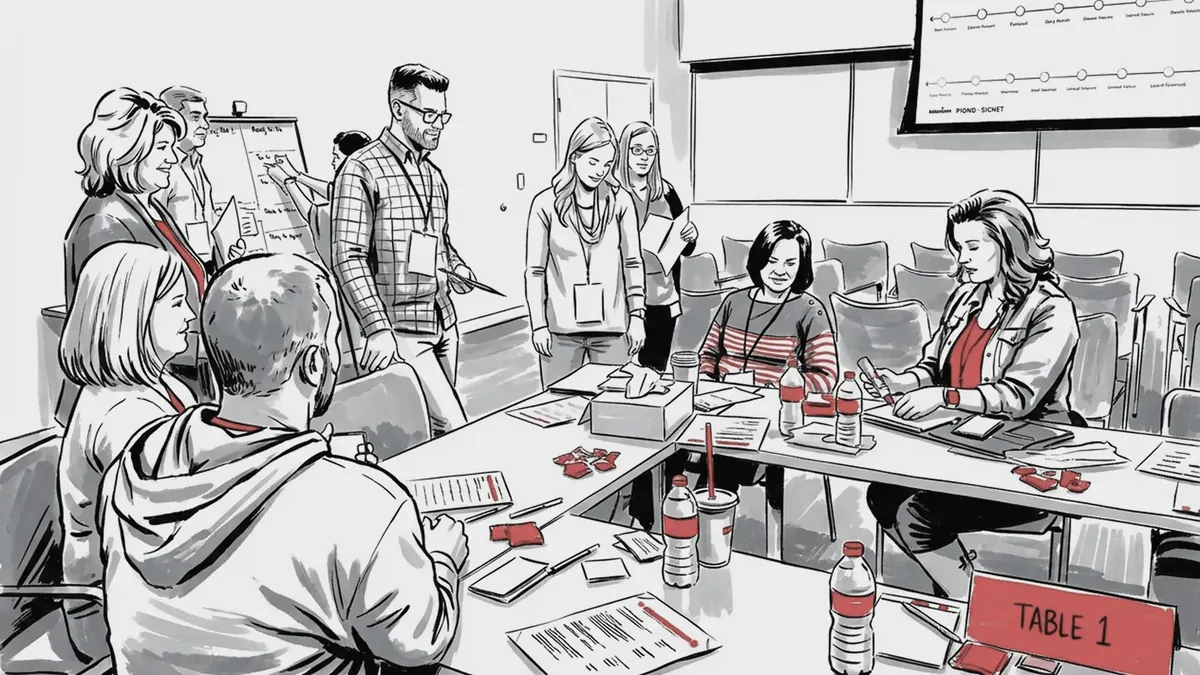
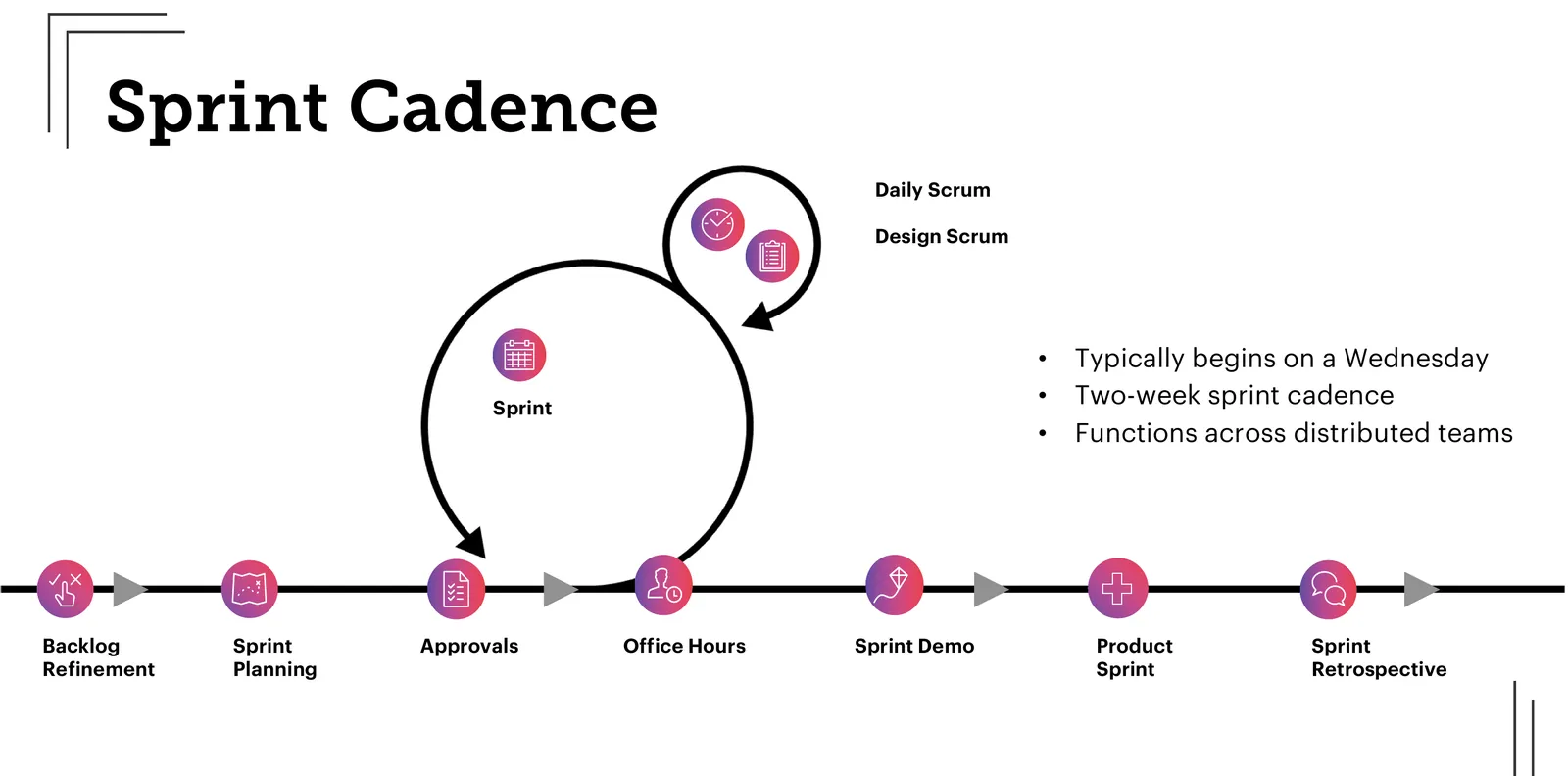
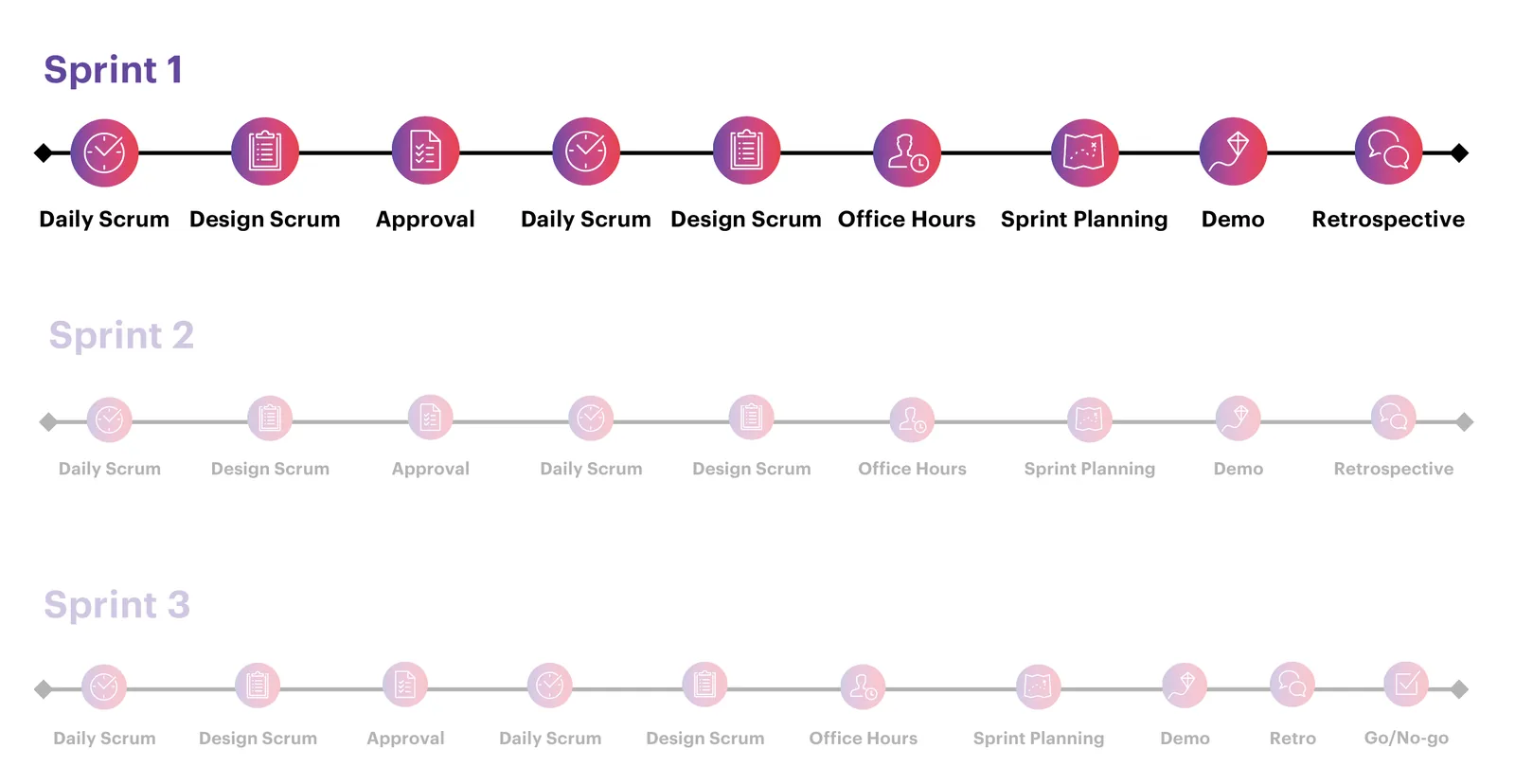
The model also had to work across distributed teams from day one. One vision-workshop table was fully remote, and the cadence was explicitly built to function across locations and time zones. The playbook notes it can take two to four sprints just to establish sprint-metric baselines. (A paper flag, it turns out, teaches sprint planning faster than a slide about sprint planning.)
The second workshop closed with the next moves: set a definition of done, track deliberate debt in the backlog, write a communication plan, run a RAID log, and stand up a steering committee for new initiatives.
The system view
The two workshops and the playbook connect into one loop:
- Vision: who the product is for, what success looks like, and a statement the team can steer by
- Prioritized epics: a ranked top ten instead of a 97-item wish list
- Roles: who decides scope, who writes stories, who approves design, who clears blockers
- Cadence: two-week sprints, with design two sprints ahead of development
- Definition of done: acceptance criteria met, functional tests passing, the product owner accepting the story, the product manager approving closure, and a cap on open defects
- Retro: what went well, what could improve, and how we'd fix it, feeding the next sprint
Nine principles
The playbook sat on nine principles that we grouped under "Being Agile": executive commitment to a new culture, trust and empower teams, coach and upskill colleagues, collaborate continuously, learn from doing, unremitting focus on value, automate and streamline, test early and often, and user-centricity. The first one spells out what it asks of leaders: strong leadership shown in actions, support and participation.
Paper on the table
The ceremonies came off the screen and onto paper, in handouts I designed. A printed cheat sheet listed every core ceremony with its purpose and who should attend, from backlog refinement to the retrospective. A matching activity sheet had people pair each ceremony with its definition. The four Daily Scrum questions were right there in the middle: What did I work on yesterday? What will I work on today? Do I have any blockers? Are there any escalations?
Product can't deliver alone
One slide in the playbook workshop deserved its title. Product Vision sat at the root of a capability map that branched to product management, architecture, technical integration and platform, vendors, data and analytics, change management, governance, content management, finance, legal, marketing, release management, performance and production support. The point for a brand-new product team: name your dependencies early.
What the written playbook added
The workshop taught the starters. My revision of the playbook filled in the rest. It's a 66-page working draft, dated January 2022, with eight core roles plus nine overarching ones, a two-product team structure, 18 ceremonies (each with an owner, duration and frequency), a nine-step user story status path, Go/No-Go criteria, and an on-ramp from an Activation Sprint to Sprint 1.
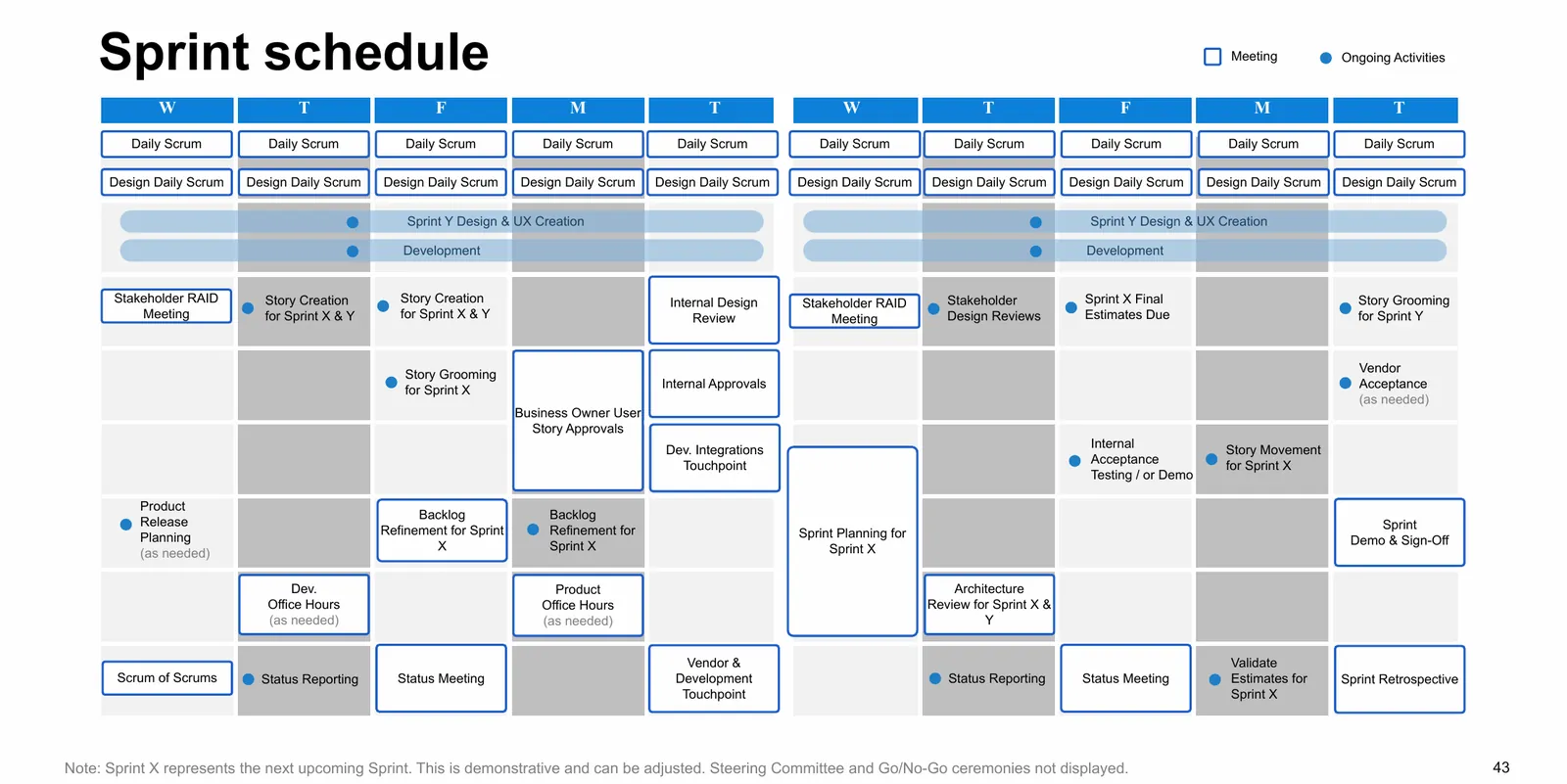
In more detail:
- Overarching roles shared across teams: product strategist, design director, UX researcher, content lead, copywriter, solution architect, DevOps lead, change management lead and agile coach
- Ceremonies beyond the core: Scrum of Scrums, architecture reviews, stakeholder RAID meetings, vendor and integration touchpoints, business-owner story approvals, status meetings, steering committee and Go/No-Go, each with an owner, a duration and a frequency
- Working agreements: a meeting calendar with named invitees, an escalation path, notes owned for every meeting, and standardized story statuses, estimation and priority categories across teams
- Stakeholder rules: a RACI with a single point of contact per stakeholder area, so approvals happen on time and with the right people
- Getting started: Activation Sprint, Design Sprint 0, Sprint 0, Design Sprint 1, then Sprint 1 at full cadence
P.S.
The playbook workshop landed two days before Valentine's Day, so we leaned in: role monsters with hearts on their bellies, candy hearts on the break slides, and a flag for a Valentine's Day launch party as the thing the room had to ship. "Done," as the slide said, is "such a powerful word!"
Sources and further reading
Ask about this project
Questions about Signet Playbook? Email connect@girtonian.com.